Yom Kippur is the culmination of a period in the Jewish calendar known as the Ten Days of Repentance, a time when Jews all over the world look back at the year that has passed and take an honest accounting of what we have accomplished and what we have neglected. Our spiritual goal during this season is to use that introspection to propel us to the best version of ourselves in the year to come.
This call to personal and collective accountability feels particularly urgent this year. I recently returned from the Atlanta Summit of Black Pastors and Rabbis. Sixty clergy members from around the country gathered at some of the key landmarks of the civil rights movement to consider how Black and Jewish Americans might renew a partnership that has helped shape America for the better.
This partnership stretches back more than a hundred years to a period when both groups were building national organizations to advance their rights. Jews were among the founders of the NAACP and Jews and Blacks worked together to establish the Leadership Conference on Civil Rights, a coalition that pressed Congress to enact the Civil Rights Act, the Voting Rights Act, and the Fair Housing Act, among other important pieces of legislation. Jewish activists Andrew Goodman and Michael Schwerner, as well as Black activist James Chaney, were murdered in Mississippi while working to register Black voters. Black leaders A. Philip Randolph and Bayard Rustin organized the Black Americans to Support Israel Committee.
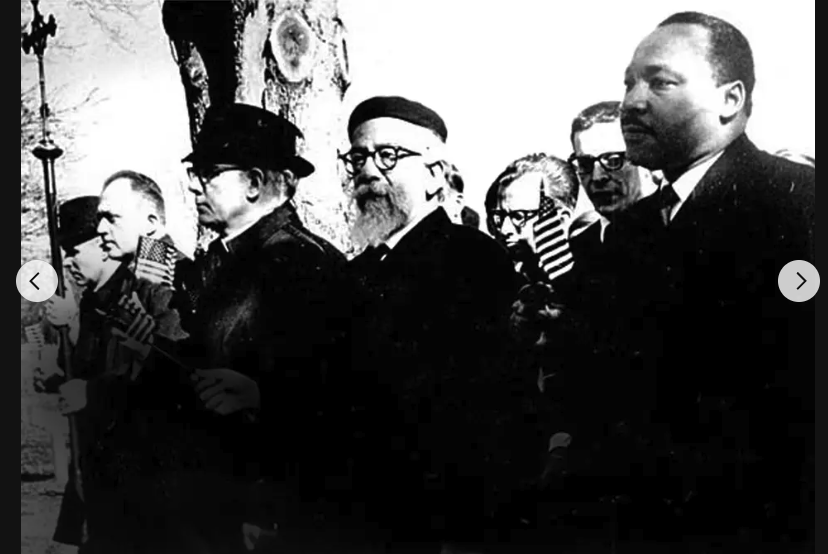
Honoring that history cannot mean simply admiring old photographs of the Rev. Dr. Martin Luther King Jr. and Rabbi Abraham Joshua Heschel marching side by side in Selma, Alabama. Their legacy – and this time of profound spiritual imperatives – demand that we consider what is required of us in the months and years ahead.
At the summit, we discussed how Black and Jewish Americans can exercise significant civic and electoral power when we act together. That does not mean that Black and Jewish voters will necessarily prioritize all the same issues or reach the same conclusions about pressing matters. There are, however, obvious communal concerns that overlap in our communities which ought to be recognized. For example, attacks on synagogues and Black churches underscore the need for greater funding for the federal Nonprofit Security Grant Program.
These shared priorities reflect the fact that our similarities are far greater than our differences. Both communities have seen the deleterious effects on our society when racist hatred and antisemitic hostilities spread online, and both Blacks and Jews know what happens when any sort of prejudice is permitted to spread unchecked.
But before we can respond to a crisis together, we need to know one another well enough to understand what keeps each community awake at night. That knowledge is the cornerstone upon which trust is built. In Atlanta, Black participants spoke honestly about unequal opportunity and the economic pressures facing Black families, especially women. Jewish participants described the insecurity created by rising antisemitism and threats against Jewish institutions emanating from white supremacists and anti-Zionist extremists. Listening to each other’s stories helped us better understand how both communities’ security and dignity are connected.
This work has already started here in Houston, where Black and Jewish college students are building relationships over shared meals and educational opportunities. In our city, members of synagogues and Black churches have already begun visiting one another and speaking frankly about racism and antisemitism. As our bonds deepen and grow stronger, our communities should undertake service projects together and civic leaders from both communities should encourage nonpartisan voter participation and community engagement.
At the end of the Atlanta Summit, each participant signed a covenant that provides a framework for this effort. We agreed that when one community is threatened, the other will stand with it; that disagreement will not become abandonment and that we will use our combined influence to make both of our communities safer and more just.
Yom Kippur reminds us to focus our vision and recalibrate our actions in keeping with our spiritual values and ideals. Our task is to build the Black-Jewish relationship that this moment requires: a relationship rooted in trust, organized for impact, and strong enough to help one another withstand the turbulent currents of our day.
Rabbi Oren J. Hayon is Senior Rabbi of Congregation Emanu El in Houston.
Read Rabbi Hayon's Op-Ed in the Houston Chronicle, Sept. 20, 2026